“But for a dream, born in a herdsman’s shed, And for the secret Scripture of the poor.“1
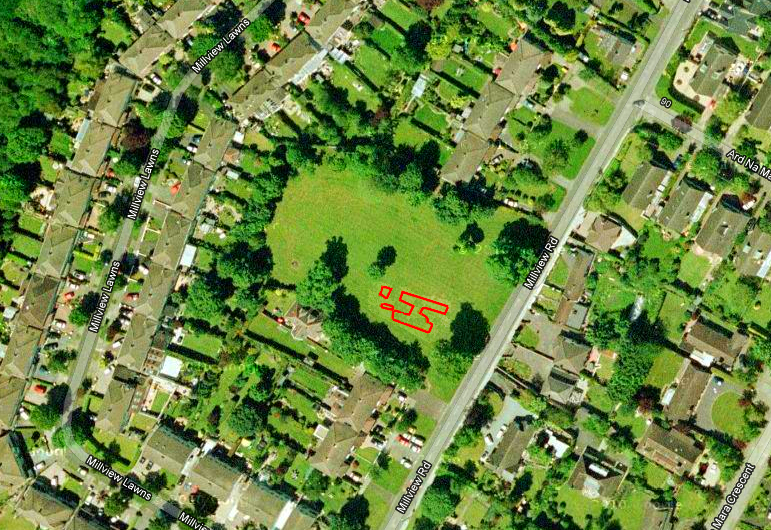
One of the four roads that meet at Yellow Walls crossroads is Millview road. About 0.5 km down from the crossroads, there is a large green open space off to the right of Millview road. Up until 1971, when it was demolished, Millview House stood here in the middle of a 10† acre farm. The house was named for its view of the windmill that once stood on Feltrim Hill, about 1.5 km away.
Millview House was the home of the Kettles. Andrew Kettle was a farmer and well known political activist, being one of the founders of the Land League and a close ally of Charles Stewart Parnell.
Andrew Kettle was also the father of Tom Kettle. Tom Kettle was born at Millview in 1880*, the seventh of twelve children. Tom Kettle was a man of many talents and callings – poet, journalist, politician, economist, and soldier.
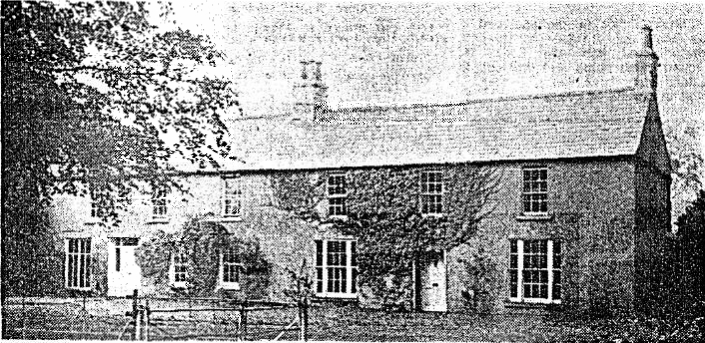
Kettle Homestead, Yellow Walls (demolished 1971)
The family were well off and Tom Kettle attended Clongowes College in Kildare and University College Dublin, where he developed friendships with Francis Sheehy Skeffington, Oliver St. John Gogarty, and James Joyce.
Kettle suffered from poor health throughout his life, having at one stage to interrupt his university studies. After graduation, he studied law at King’s Inns. He was called to the bar in April 1906 but never practised as he was invited to contest a by-election in East Tyrone as the Irish Party candidate. He won and was elected to the House of Commons at the age of 26.
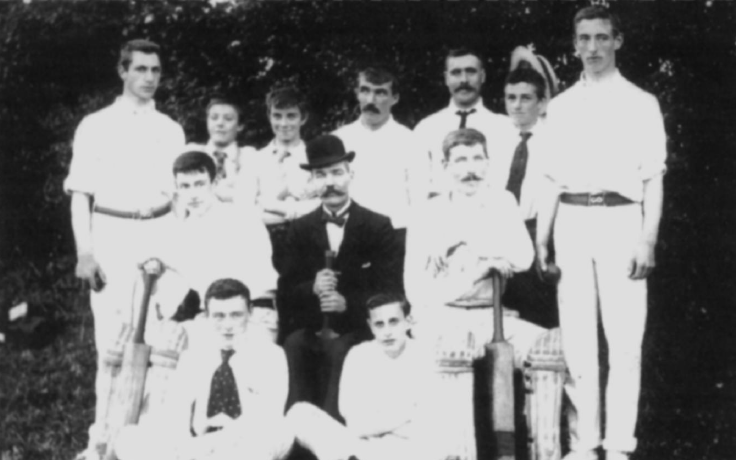
Tom Kettle (standing in back row, far left) at Malahide Cricket Club, 19013
Kettle was made Professor of Economics at UCD in 1909, and ultimately gave up his parliamentary seat to concentrate on his academic career.
Kettle was deeply committed to the cause of All-Ireland Home Rule and joined the Irish Volunteers in 1913. He was in Ostend in Belgium buying arms for that organisation when the First World War began. As someone who was also involved in journalism from a young age, he remained in Belgium as a war correspondent for the Daily News.
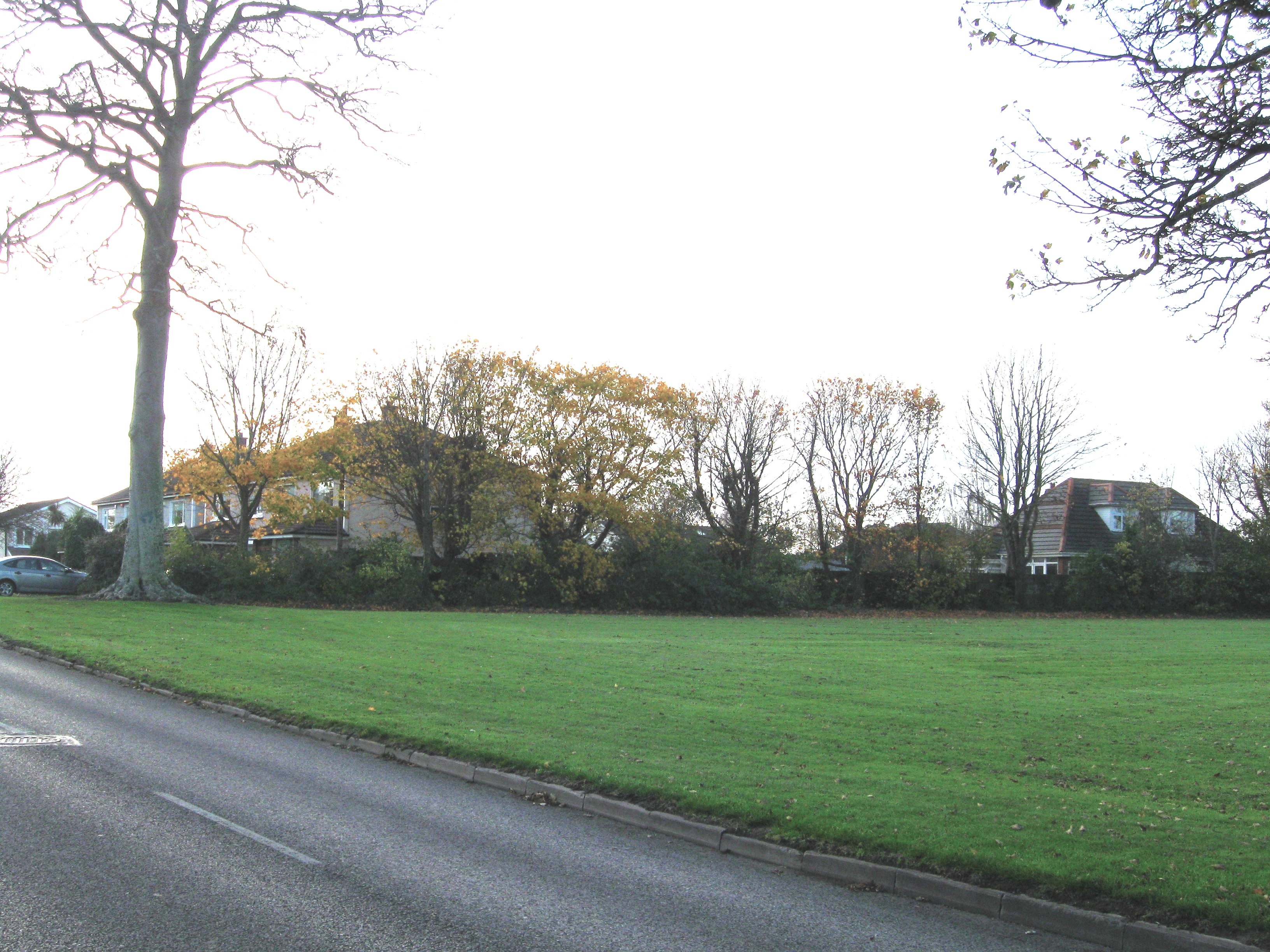
Site of the former Kettle Homestead at Millview Road, Yellow Walls
On his return to Dublin, Kettle decided to enlist in the British army. Britain had by this time agreed in principle to Home Rule for Ireland and Kettle saw no contradiction in fighting for her cause: “Here, at the opening of this vast and bloody epic, Great Britain is right with the conscience of Europe. It is assumed that she has reconciled Ireland. A reconciled Ireland is ready to march side by side with her to any desperate trial.”2
He was commissioned in the Dublin Fusiliers in November 1914 but was not sent to the front on the grounds of ill health, instead acting as a recruitment agent. Eventually though, and after much persistence, he was dispatched to France in July 1916.
Kettle was killed in action in France on September 9th that year during the assault and capture of Ginchy. Shot through the chest by a sniper, Kettle fell almost immediately as he led his men over the top of the trenches and towards the German lines.
Two days earlier he had a written a poem for his infant daughter Betty. The poem, “To My Daughter Betty, The Gift of God”1 includes the lines:
“So here, while the mad guns curse overhead,
And tired men sigh, with mud for couch and floor,
Know that we fools, now with the foolish dead,
Died not for Flag, nor King, nor Emperor,
But for a dream, born in a herdsman’s shed,
And for the secret Scripture of the poor.”
A bust erected in honour of Tom Kettle in St. Stephen’s Green, Dublin in 1937 includes the last three lines of the above quote.
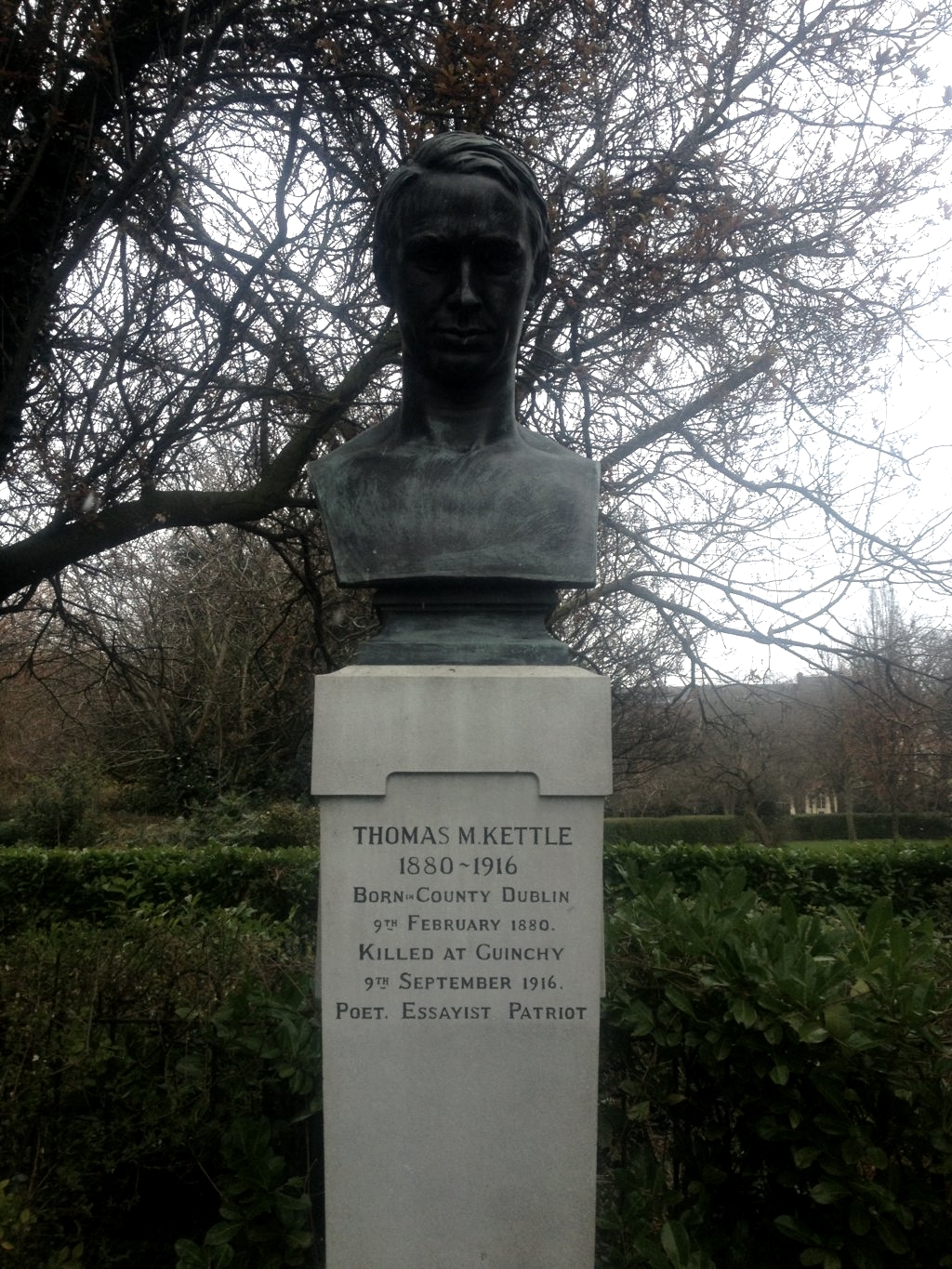
Thomas Kettle Memorial, St. Stephen’s Green, Dublin
Kettles Memorial Park was opened in Drynam, near Kinsealy, in 2016.4 Andrew Kettle was born in Drynam, where his family held a 30 acre farm, in 1833.
†The size of the farm may have varied over time. A newspaper notice from 1862 advertising the sale of Millview House describes “17 ½ acres of superior Grass Land and [a] Dwelling House, which contains as follows:-viz., two drawingrooms, parlour, and sittingrooms, and five bedchambers, kitchen, pantry, dairy, &c. The out offices comprise box stabling for three horses, coach-house, cow houses, &c.; large garden, walled in and fully cropped, with fruit trees and vegetables in great variety.” The house was put up for sale by the owner Andrew Langan, who was leaving “to reside on one of his farms in the County Meath.”5
*Tom Kettle’s birthplace is sometimes given as Artane where the family also had a holding. However, Andrew Kettle, in his memoir “Material For Victory”, states his son’s birthplace as Millview.
Sources
1. Kettle, Thomas. To My Daughter Betty, The Gift of God, in: Cross, Tim The Lost voices of World War I: an international anthology of writers, poets & playwrights. University of Iowa Press, 1989.
2. Lyons, JB. Tom Kettle, 1880-1916, Dublin Historical Record, Vol. 43, No. 2 (Autumn, 1990). Old Dublin Society.
3. Burke, Tom. In Memory of Lieutenant Tom Kettle, ‘B’ Company, 9th Royal Dublin Fusiliers, Dublin Historical Record, Vol. 57, No. 2 (Autumn, 2004). Old Dublin Society.
4. Fingal Independent, Sep 24, 2016.
5. Freeman’s Journal, Oct 20, 1862; Page 2.


 Old Yellow Walls